Energy Storage Systems
PCS, BESS and Hybrid Cabinets
Forte's energy storage range covers Power Conversion Systems (PCS), Battery Energy Storage Systems (BESS) and hybrid solar+battery cabinets. The architecture is modular and scales from 30 kW commercial installations to 100 MW utility projects.
The PCS cabinets handle bidirectional AC-DC conversion over a battery voltage range of 250 V to 1500 Vdc. With containerized or rack-mounted BESS and an Energy Management System (EMS), the systems are used for peak shaving, renewable integration and grid support.
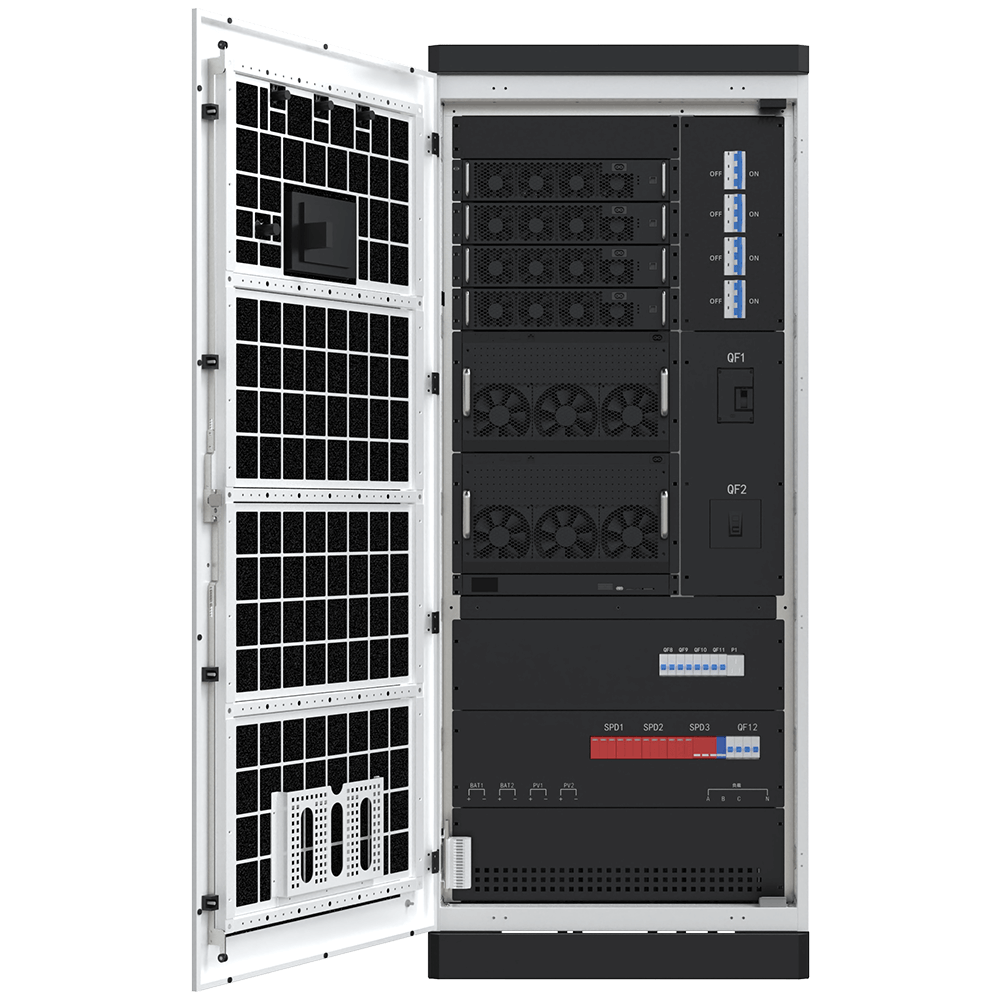
Three Product Lines: PCS, BESS and Hybrid BESS
Standalone power conversion, containerized battery systems, and solar+storage cabinets.
PCS Systems
Bidirectional AC-DC power conversion for battery energy storage. Modular PCS cabinets from 105 kW to 3.45 MW, battery voltage 250 V to 1500 Vdc.
BESS
Battery energy storage in containerized (20 ft / 40 ft) and rack-mounted configurations, from 30 kW commercial to 100 MW utility scale.
Hybrid BESS
Solar+battery hybrid cabinets with MPPT, PCS, STS and EMS in one enclosure. For self-consumption, off-grid and microgrid operation.
PCS Modules, Conversion Efficiency and Grid Functions
What the PCS and the EMS do.
Modular Design
PCS modules from 30 kW to 215 kW are paralleled inside standard cabinets. Capacity can be added later without replacing the existing modules.
Bidirectional Power Flow
The PCS converts in both directions: charge from the grid or solar, discharge to loads or back to the grid. The EMS sets the direction.
Efficiency ≥ 98%
PCS conversion efficiency is 98% or higher. Thermal management is sized for continuous operation at rated power.
Grid Support Functions
Frequency regulation, voltage support, reactive power compensation and black start.
EMS
The Energy Management System (EMS) provides real-time monitoring, automated dispatch, load forecasting and cloud analytics. Modbus, CAN and Ethernet for SCADA integration.
Applications: Peak Shaving to Microgrids
Seven ways a storage system is used in commercial, industrial and utility sites.
Peak Shaving
Reduce demand charges by discharging stored energy during peak consumption periods.
Load Shifting
Charge during off-peak tariff hours and discharge during high-tariff periods.
Grid Support
Frequency regulation, voltage support, and spinning reserve services. Participate in ancillary service markets.
Microgrid
Island or grid-connected microgrids, with transition between grid-tied and islanded operation.
Backup Power
Switchover for critical loads. Replaces or supplements diesel generators.
Renewable Integration
Stores excess solar and wind generation for later dispatch and smooths intermittent output at the grid feed-in.
EV Charging
Buffers high-power EV charging demand from local storage, so the grid connection does not have to be upgraded.
Send your load profile and tariff. We size the PCS, BESS or hybrid cabinet and quote it.
Peak demand, daily consumption and the target application are enough to start.
Request a Quote
Tell us about your energy storage project and a Forte engineer will respond within 1 business day.